The International Phonetic Alphabet (IPA)
History
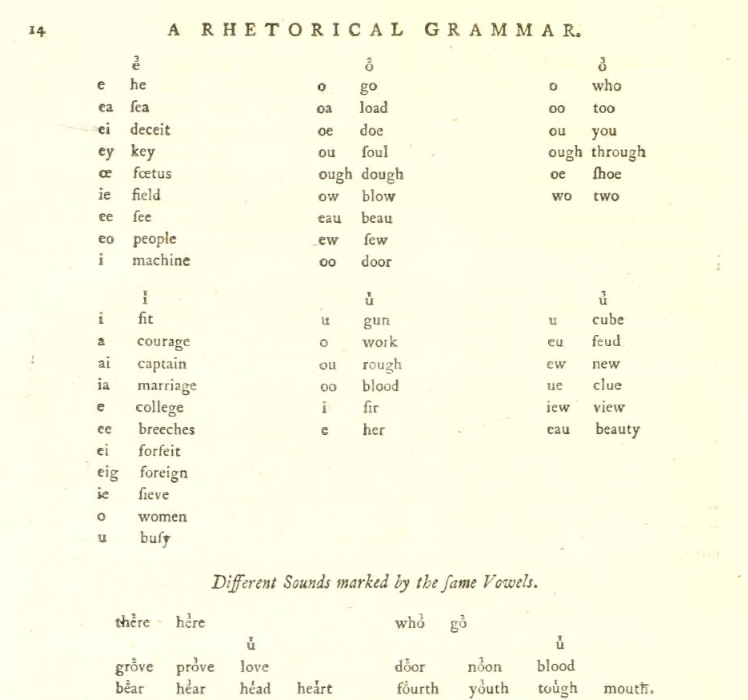
Thomas Sheridan made one of the earliest serious attempts to transcribe English phonetically in A General Dictionary of the English Language, published in 1780. Because no standardised phonetic script existed at the time, he relied on respellings and superscript numbers above vowels, which proved clunky and unreliable. In 1888, a group of French and British linguists led by Paul Passy introduced the International Phonetic Alphabet to standardise the way speech sounds are written. It wasn’t until 1917 that the phonetician Daniel Jones codified RP using the International Phonetic Alphabet in his English Pronouncing Dictionary.
Why we need it
The IPA provides clarity for ESL students, language teachers, actors, narrators, and voice coaches looking to master standard accent patterns.

Because English spelling is not phonetic, words that look identical on the page can sound completely different. Sometimes the vowel changes entirely depending on meaning, such as read in the present tense (/riːd/) versus the past tense (/red/). In other cases, a word shifts its stressed syllable depending on whether it is used as a noun or a verb, such as export, record, or present.
Examples
Unfamiliar Place Names
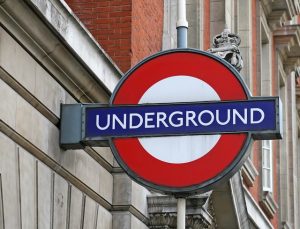
Consider London Underground stations like Holborn or Southwark. Without local knowledge, their pronunciations can be completely unpredictable.
We can use the International Phonetic Alphabet to show their exact pronunciations:
Holborn:
/ˈhəʊbən/Southwark:
/ˈsʌðək/
Comparing British & American Pronunciation
Non-rhotic accents like Received Pronunciation (RP) omit the /r/ sound at the end of words unless followed by a vowel sound.
For example, compare the word ‘brother’:
- RP (British): /ˈbrʌðə/ (silent final ‘r’)
- General American:
/ˈbrʌðər/(pronounced final ‘r’)
The 20 Vowel Sounds
The 20 vowel sounds of British English pronunciation can be categorised by:
- Monophthongs vs. Diphthongs (single vs. gliding vowel sounds)
- Length (short vs. long vowels)
- Tongue Position (height and front/back position)
- Lip Shape (rounded, unrounded)
- 7 Short Vowels: /æ/, /ɪ/, /ʊ/, /e/, /ɒ/, /ʌ/, /ə/
- 5 Long Vowels: /iː/, /ɜː/, /ɔː/, /uː/, /ɑː/
- 8 Diphthongs: /eɪ/, /ɔɪ/, /aɪ/, /ɪə/, /ʊə/, /eə/, /əʊ/, /aʊ/
The 24 Consonant Sounds
The 24 consonant sounds of British English pronunciation can be categorised by how and where airflow is obstructed:
- Plosive Sounds: /p/, /b/, /t/, /d/, /k/, /g/
- Fricative Sounds: /f/, /v/, /θ/, /ð/, /s/, /z/, /ʃ/, /ʒ/, /h/
- Affricate Sounds: /tʃ/, /dʒ/
- Nasal Sounds: /m/, /n/, /ŋ/
- Lateral & Approximant Sounds: /r/, /l/, /w/, /j/
Voiced & Voiceless
Consonant sounds are also classified as either voiced or voiceless. Voiced consonants are produced with vibrating vocal cords, while voiceless consonants are produced with no vocal cord vibration.
Voiced consonants:
Plosives:
/b/,/d/,/g/Fricatives:
/v/,/ð/,/z/,/ʒ/Affricates:
/dʒ/Nasals:
/m/,/n/,/ŋ/Approximants & Laterals:
/r/,/l/,/w/,/j/
Voiceless consonants:
Plosives:
/p/,/t/,/k/Fricatives:
/f/,/θ/,/s/,/ʃ/,/h/Affricates:
/tʃ/
Definitions
Phoneme: The smallest unit of speech sound that distinguishes one word from another.
Monophthong: A single, pure vowel sound articulated without moving the mouth during production.
Diphthong: A gliding vowel sound where the voice transitions smoothly from one vowel target to another within the same syllable.
Short Vowels: Vowels produced with a brief duration and without a length mark.
Long Vowels: Vowels produced with a extended duration, indicated by a length mark (
ː) to the right of the symbol.